
Fishing on Lake Buchanan
Unlocking the Secrets of Fishing on Lake Buchanan: A Texas Angler’s Paradise
Nestled in the heart of Texas Hill Country, Lake Buchanan offers a sprawling escape for anglers seeking both adventure and tranquility. As the largest of the Highland Lakes chain, this 22,211-acre reservoir on the Colorado River is a powerhouse of recreation, boasting crystal-clear waters, rugged shorelines, and a rich history that dates back to its construction in 1937 by the Lower Colorado River Authority (LCRA). Whether you’re chasing trophy fish or simply enjoying the scenery, Lake Buchanan delivers year-round opportunities with a mix of well-known hotspots and under-the-radar surprises. In this blog, we’ll dive into the essentials of fishing here, share expert tips, and reveal some facts that even seasoned locals might not know.

Lake Buchanan Aerial
A Brief History and Overview of Lake Buchanan
Lake Buchanan was built for multiple purposes: hydroelectric power, water supply, flood control, and recreation. Stretching 30.65 miles long with a maximum depth of 132 feet, it supplies water to over a million people in the region. The impressive Buchanan Dam, spanning two miles and featuring 37 floodgates, stands as a testament to early 20th-century engineering. But beyond its practical roles, the lake has evolved into one of Texas’s premier fishing destinations, stocked extensively since the 1970s to support thriving populations of game fish. Fishing is productive year-round, with prime seasons in spring and fall when water temperatures encourage fish activity.
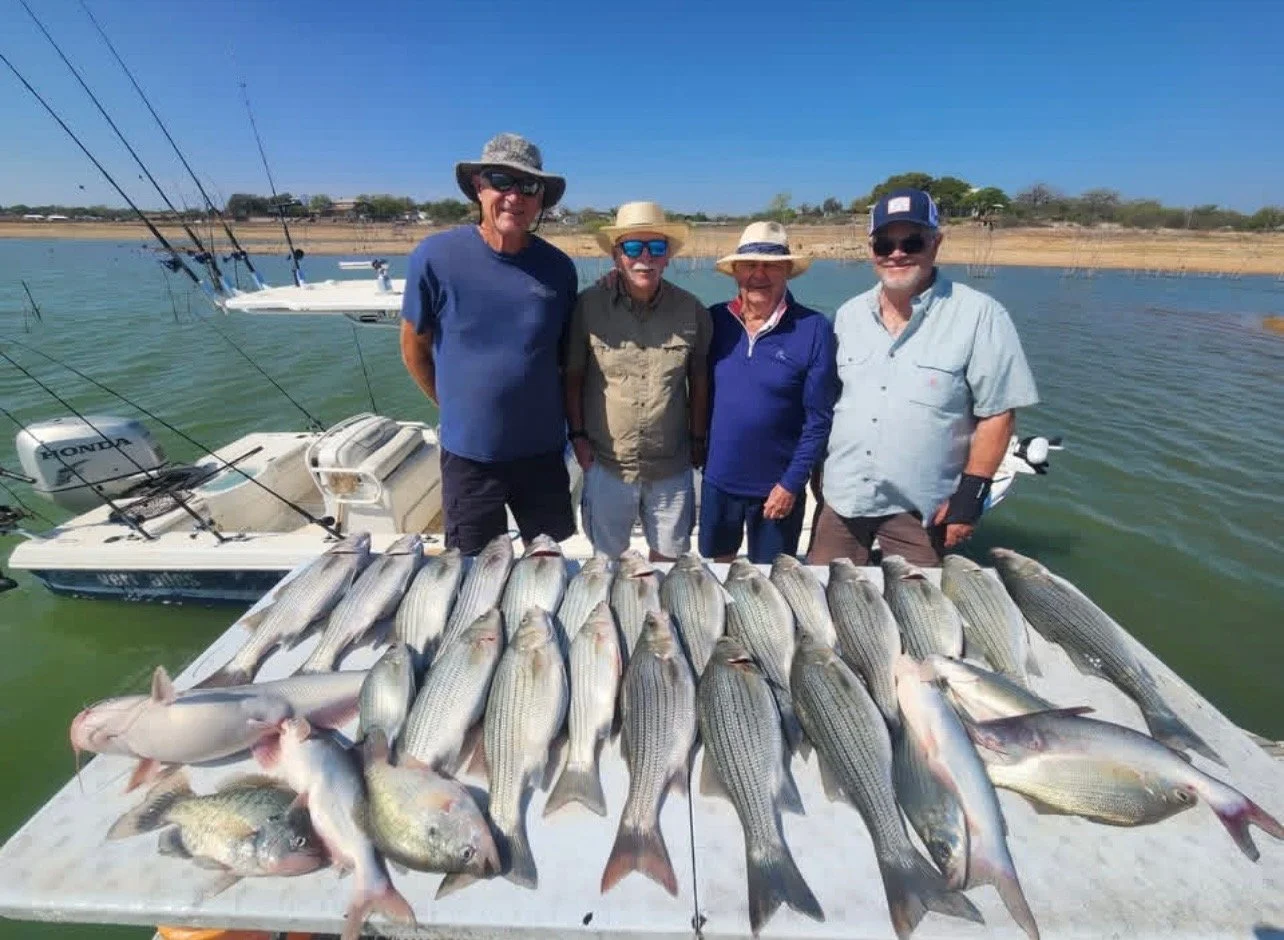
A Big Catch courtesy Bosstriper Fishing Guide Service
Prime Fish Species and What to Target
Lake Buchanan is renowned for its diverse fishery, but it’s particularly famous for striped bass and white bass. Here’s a breakdown of the top species:
• Striped Bass (Stripers): Considered one of the best striper fisheries in Texas, these hard-fighting fish have been stocked almost annually since 1977. They grow quickly, often reaching the 18-inch keeper size, and can be targeted year-round. Stripers do not naturally reproduce in the reservoir, so the population relies on TPWD stocking efforts.
• White Bass and Hybrids (Sunshine Bass): White bass runs occur in spring (typically February through May), drawing anglers to the upper river channels. Hybrids, a cross between striped and white bass, add excitement with their size and strength. The lake also receives hybrid stockings to enhance the fishery.
• Largemouth Bass and Guadalupe Bass: While underrated compared to the bass in nearby lakes, Buchanan holds solid populations. Guadalupe bass, native to Texas rivers, are a unique catch here and thrive in the riverine upper sections.
• Catfish: Channel and blue catfish abound, especially in fall. They’re commonly caught using cut bait or live options.
• Crappie: A low-density population in the upper end yields many large white crappie, making it a hidden gem for slab hunters, particularly in winter and spring.
A valid Texas fishing license is required, and the lake’s clear blue waters make it ideal for spotting schools of baitfish that attract predators.
Expert Fishing Tips and Techniques
To maximize your success, timing and tactics are key. Early mornings and late evenings are prime, as fish are more active in cooler conditions. Here are proven strategies:
• For Stripers and Whites: Use live shad as bait—it’s the top choice, though keeping it alive requires a good aerator. In spring, target runs up the Colorado River with spoons or swim baits in 20 feet of water. Summer calls for downriggers or vertical jigging near the dam in deeper areas (30-40 feet on main lake points and humps). Fall transitions involve humps, ledges, and river channels, often with trolling crankbaits or jigging spoons.
• For Bass: Spring and fall are best for largemouth. Try Texas rigs pitched around brush and stickups, bladed jigs near points and shad schools, or shaky heads for finesse. Topwater lures work well when bass are suspended over structure, especially around rocky banks and flooded willows.
• For Catfish: Cut bait or live bait in fall yields abundant channel and blue cats.
• For Crappie: Spider rigging in winter or chartreuse jigs/minnows in 2-17 feet near brush piles and docks during spawn.
Vary your methods—try different rigs, baits, and locations to adapt to the fish’s mood. Tools like depth finders and apps for mapping structure can help tremendously.
Hotspots to Hit
• The Dam: Deep, rocky areas perfect for stripers, hybrids, white bass, and catfish, especially in fall and with live bait or vertical jigging.
• The Islands: Breaklines around islands attract largemouth and baitfish.
• The Narrows: Connecting to Lake LBJ, this narrow channel is a striper highway with resident and passing fish.
• Upper End and River Channel: Great for crappie, whites during spring runs, and Guadalupe bass, but watch for submerged trees and stained water from Beaver Creek to the Colorado River.
• Main Lake Points and Humps: Ideal for trolling or jigging stripers and whites in 16-42 feet.
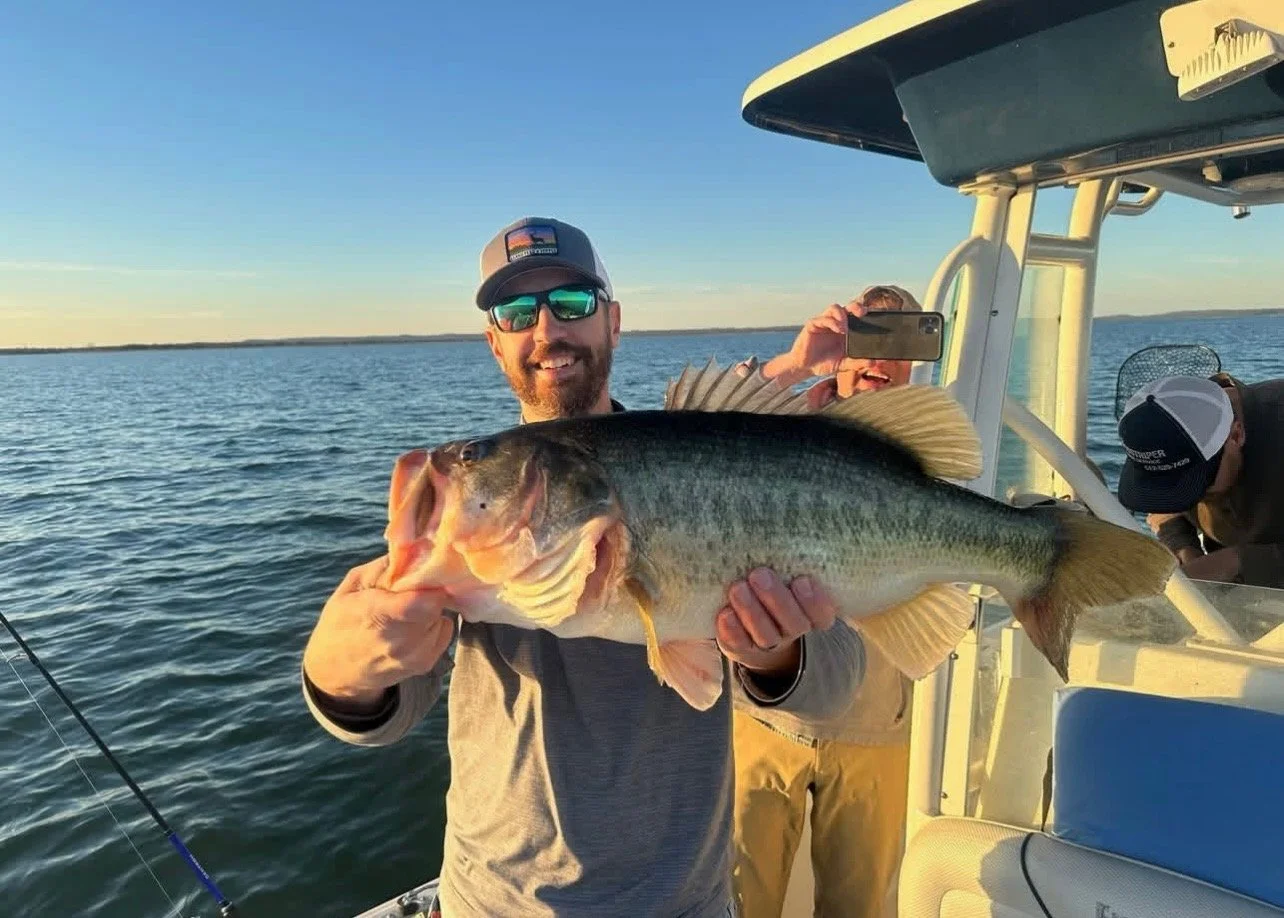
courtesy of Bosstriper Fishing Guide Service
While Lake Buchanan’s striper reputation is widespread, here are some intriguing tidbits that add depth to your trip:
• The Sunken Town of Old Bluffton: When the lake was impounded in the late 1930s, the entire town of Bluffton was submerged beneath the waters. This underwater ghost town includes old foundations, structures, and even a cemetery. During low-water periods (like recent droughts), remnants occasionally emerge, creating an eerie glimpse into the past.
• Hidden Hazards: Beyond the choppy winds that make Buchanan notoriously rough, there’s a massive shallow underwater point extending hundreds of yards near the dam, starting across from Big Chief RV Park. It’s a serious boat hazard if you’re not paying attention. Floating driftwood after heavy rains and underwater stumps in the upper river channel add unseen risks.
• Guadalupe Bass Haven: This lake hosts an underrated population of Guadalupe bass, Texas’s state fish, which are often overlooked amid the striper focus but offer a special native catch in the clearer, river-like upper areas.
• Massive Stocking Efforts: In addition to regular striper plants, the lake’s hybrid bass program includes habitat enhancements, making it a model for Texas fisheries management.
These secrets make Buchanan more than just a fishing spot—it’s a historical and ecological treasure.
Safety and Practical Considerations
Buchanan’s size and winds can turn conditions rough quickly, so always wear life jackets, check weather, and navigate carefully around hazards. Full-service marinas offer boat rentals, and guided trips are available for those new to the lake. If you’re bank fishing, spots like the upper end or Colorado Bend State Park (for white bass runs) provide great access without a boat.
Lake Buchanan isn’t just about the catch—it’s about immersing yourself in Texas’s natural beauty and uncovering layers of history beneath the waves. Whether you’re making the trek or discovering the Highland Lakes, this reservoir promises memorable angling with a side of surprises. Grab your gear, hit the water at dawn, and happy fishing!

Bank Fishing on Lake Buchanan
